
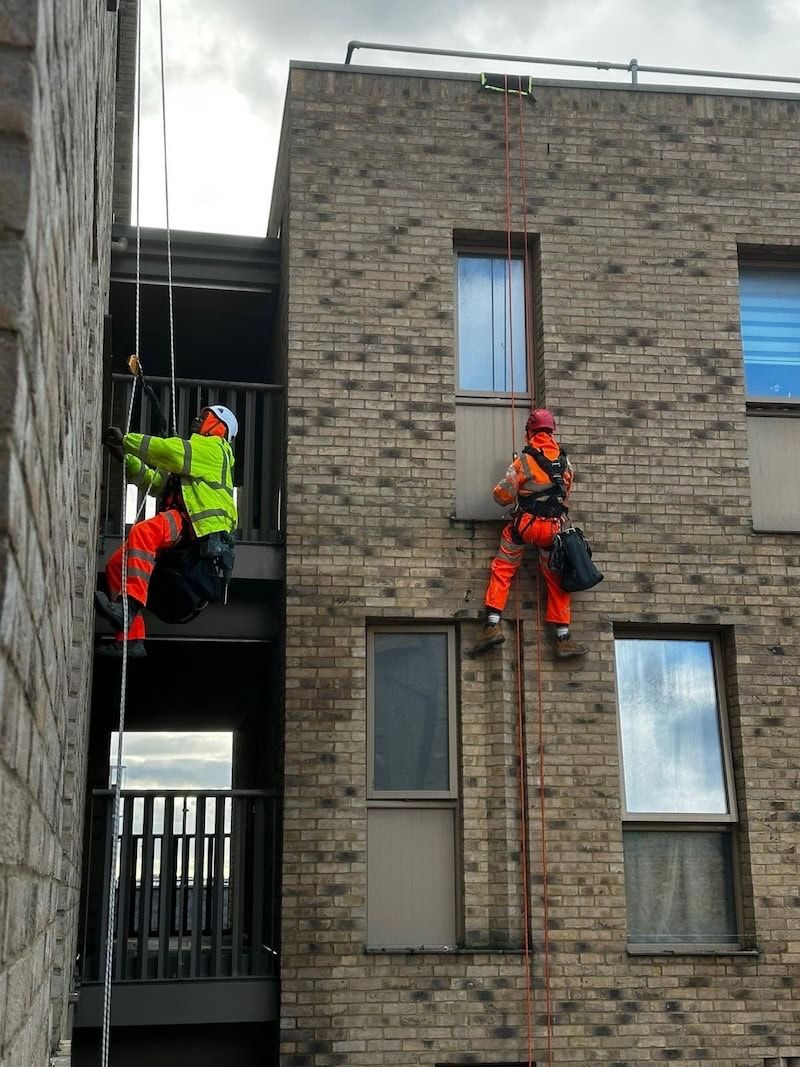
Rope Access vs Scaffolding: Which Access Method Is Best for Your Project?
When it comes to working at height on buildings, the two most common access methods are rope access and scaffolding. Both have their place, but understanding the differences can help you choose the most cost-effective and efficient solution for your project.
Scaffolding: The Traditional Approach
Scaffolding has been the go-to method for working at height for decades. It provides a stable platform for workers and can support heavy materials and equipment. However, it comes with several drawbacks:
- Cost: Erecting, maintaining and dismantling scaffolding is expensive, often accounting for a significant portion of a project’s budget.
- Time: Setting up scaffolding can take days or even weeks, depending on the building’s size and complexity.
- Disruption: Scaffolding can block access to entrances, obstruct views and create noise disturbance for building occupants.
- Space: It requires ground-level space that may not be available in busy urban environments.
Rope Access: The Modern Alternative
Rope access uses industrial ropes and harnesses to allow qualified technicians to reach any part of a building. IRATA-qualified technicians are trained to work safely and efficiently at any height.
- Cost-effective: Typically 50-70% cheaper than equivalent scaffolding projects.
- Fast setup: Rope access can be deployed in hours rather than days.
- Minimal disruption: No ground-level obstruction and significantly less noise.
- Versatile: Access to areas that scaffolding cannot easily reach, including complex architectural features.
When to Use Each Method
Rope access is ideal for inspections, cleaning, painting, small-scale repairs and bird control. Scaffolding may be more appropriate for large-scale renovation projects where workers need prolonged access and need to move heavy materials.
At Avisan, we assess every project individually and recommend the most suitable access method based on the specific requirements, building type and budget.
Need Rope Access Services?
Get a free, no-obligation quote from our IRATA qualified team.