
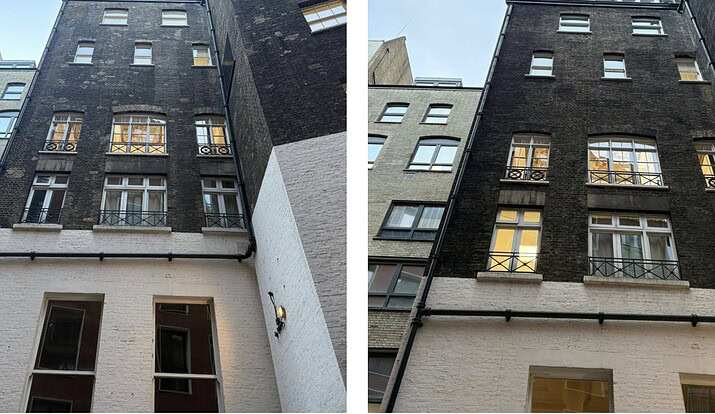
Soot Wash: Brick Tinting to Age and match Brickwork
Ever seen new brickwork alongside old brickwork stand out like a swore thumb?
The black staining often seen on brickwork is carbon pollution statement. Sometimes reffered to as atmospheric pollution.
If your brickwork has this black staining there are two possible solutions.
- Remove the carbon staining from the old brickwork – This can be performed by our sister company LBC Exterior Cleaning that specialise in this process.
- You can brick tint the newer brickwork to blend in with the old – This brick tintinting or brick dying has many different descriptions and terminolgy. Some people may refer to it as brick ageing, some people may refer to it as brick matching and even the term Soot Wash. Whatever the terminology the outcome is the same and Avisan can help you. Wherether the brickwork that needs darkening is ground level or up high we have the capability and experience to get to the area. Scaffolding, Mewps or even rope access as in the example above.
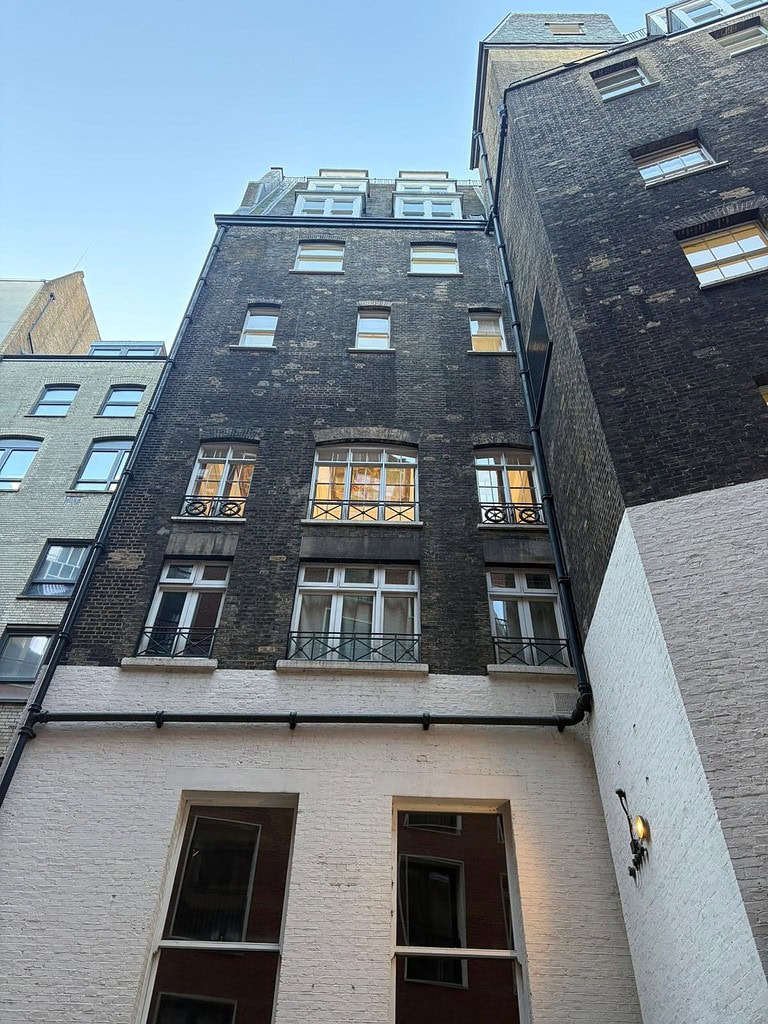
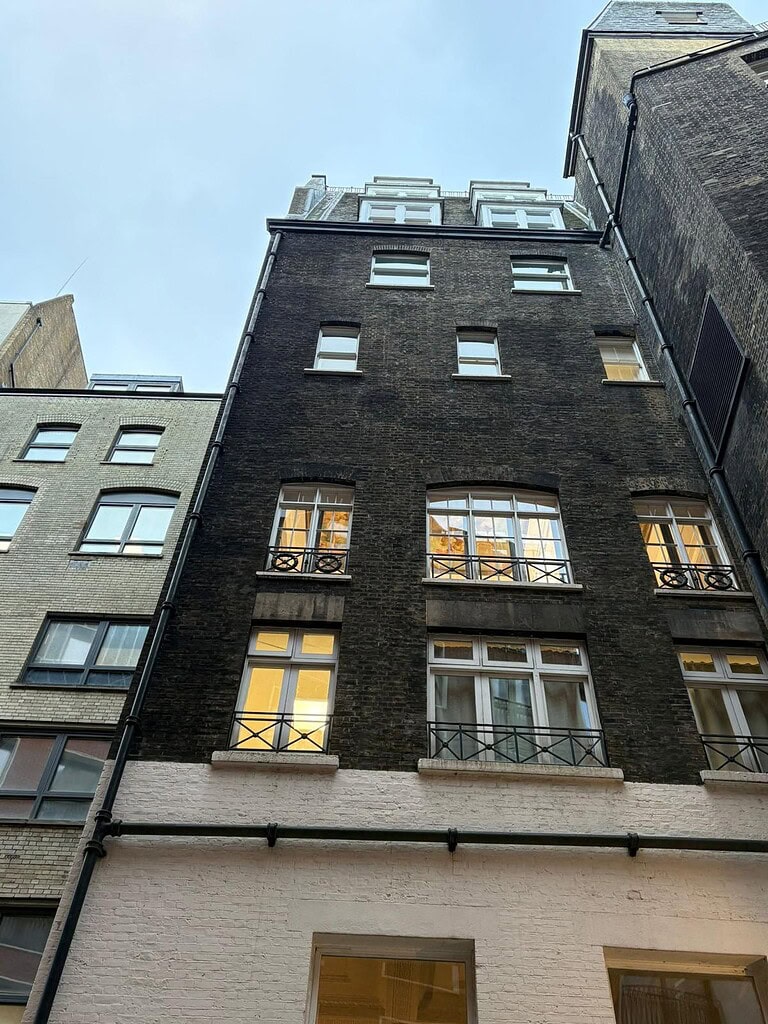
Soot Wash Brick Tinting
If you’re researching soot wash, black brick tinting, or how to make bricks look older and more characterful, you’ve likely noticed how modern builds can feel too clean—almost sterile.
Architects and owners increasingly want a heritage aesthetic, especially in London, Manchester, Birmingham, and newly built developments where uniform brickwork lacks depth.
This guide covers:
- What soot washing actually is
- The difference between soot wash, brick tinting, and brick ageing
- How professionals create authentic “old London” patina
- Cost, timescales, durability, and maintenance
- Why paint is a terrible idea
- How AVISAN delivers commercial-grade soot washing across the UK
What Is a Soot Wash?
Soot wash is a technique used to give bricks a darker, weathered, and aged appearance using mineral-based stains or specialist tint solutions.
It mimics the natural soot accumulation found on period buildings exposed to smoke, fireplaces, industry, or city pollution over 50+ years.
Key characteristics:
- Enhances brick texture (does not fill pores like paint)
- Allows the brick face to breathe
- Creates subtle tone variation, not a flat colour
- Can be applied to entire facades or targeted patches
Think of it as adding patina, not paint.
Why People Want Aged Bricks
1. Heritage Aesthetic
Developers use soot wash to give new builds the look of:
- Victorian terraces
- Edwardian warehouses
- London railway arches
- Converted factories
- Industrial lofts
It instantly adds prestige and character.
2. Breaking Uniformity
Modern brick blocks with 500 identical units look soulless.
Architects use brick tinting to establish texture and visual depth.
3. Planning & Conservation
Some councils reject “new build shine.”
Soot wash provides a sympathetic appearance to surrounding neighbourhoods.
5 Steps to Match your new brickwork with the Older Brickwork
Step 1 — Brick Cleaning
We remove:
- Efflorescence
- Dust
- Cement smears
- Algae
- Site contamination
Soot wash must be applied to clean, porous brickwork.
Step 2 — Test Swatches
- We apply sample tones in different strengths:
- Soft 10–20%
- Medium 40–60%
- Deep urban 70–100%
- Clients approve the final shade before full application.
- Step 3 — Mineral Tint Application
- We use breathable, mineral-bonding tint (not paint).
The tint fuses chemically with the masonry.
Step 4 — Curing & Blending
Soot wash is feathered, mottled, and blended to look natural — not manufactured.
Step 5 — Final Inspection
We verify:
- Colour uniformity
- No drips or brush marks
- Proper mineral absorption
- Architectural intent achieved